
In IVF treatment, gonadotropin stimulation commonly begins on menstrual cycle day 2 or day 3. Studies comparing these two schedules have not shown a clear advantage for starting on day 2. Reliable evidence is also lacking that moving the first injection one day earlier increases oocyte yield or live-birth rates in older women. [1–3]
Age does affect treatment. As ovarian reserve declines, some women have shorter menstrual cycles and earlier follicular development. Clinicians consider these changes when scheduling assessment and medication. Current guidelines do not set an age threshold—35, 38 or 40 years—at which ovarian stimulation must begin on cycle day 2. [1,4,8–11]

Evidence comparing cycle day 2 and day 3
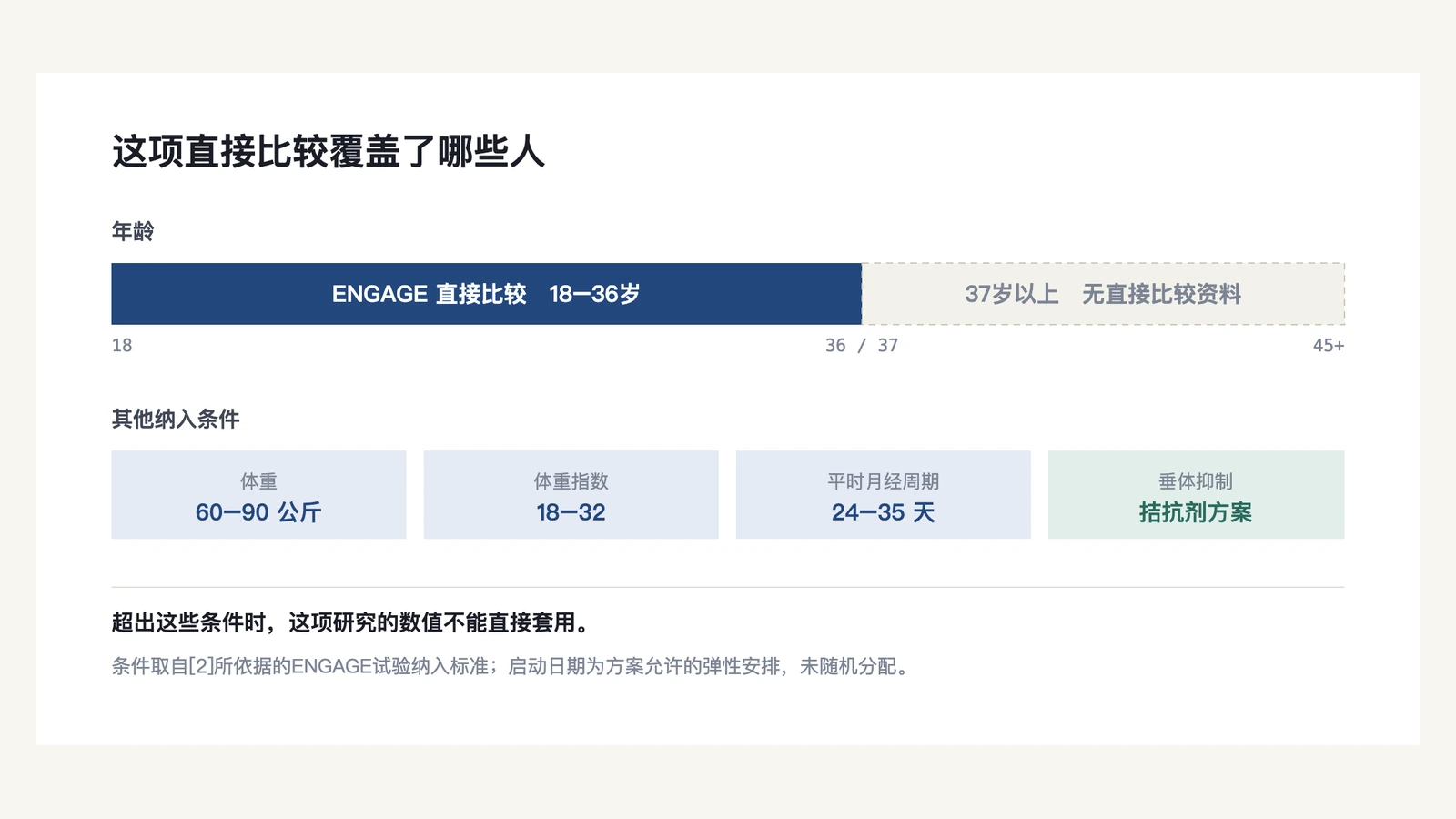
A 2013 analysis compared outcomes when ovarian stimulation began on menstrual cycle day 2 or day 3. Participants came from the ENGAGE trial. They were 18–36 years old, weighed 60–90 kg, had a body mass index of 18–32 and usual menstrual cycles of 24–35 days, and underwent a GnRH-antagonist protocol. In this protocol, an antagonist is added during stimulation to prevent premature ovulation. [2]
The analysis separately examined women receiving the long-acting gonadotropin corifollitropin alfa and those receiving daily recombinant follicle-stimulating hormone (rFSH). Within each medication group, mean oocyte yield was similar with a day-2 and day-3 start.
Table 1. Oocyte yield after starting ovarian stimulation on cycle day 2 or day 3
| Stimulation medication | Day-2 start | Day-3 start |
|---|---|---|
| Corifollitropin alfa | 14.1 ± 8.1 oocytes (343 participants) | 14.0 ± 7.9 oocytes (368 participants) |
| Daily rFSH | 12.8 ± 6.6 oocytes (353 participants) | 12.4 ± 6.5 oocytes (364 participants) |
Source: Table 1 of reference [2]. Values are mean ± standard deviation. Participants were 18–36 years old and used an antagonist protocol; the start date was not randomized. The original study was industry funded. A related analysis published in the same year [3] used data from the same trial.
Ongoing pregnancy rates also showed no statistically significant difference. In the unadjusted results, the day-3 group was numerically higher in both medication groups: 43.5% versus 37.9% for corifollitropin alfa and 43.1% versus 35.1% for daily rFSH. After adjustment for age, region, treatment group and other flexible scheduling factors, the estimated difference for day 2 minus day 3 was −4.3 percentage points, with a 95% confidence interval from −9.4 to +0.8 percentage points; the interval crossed zero. [2]
Two limitations matter. The original trial randomized the stimulation medication, while starting on day 2 or day 3 was a flexible option permitted by the trial protocol and chosen clinically. Other differences may therefore have existed between the groups. The reported outcome, ongoing pregnancy, also does not fully describe the number of live births resulting from one retrieval and any subsequent frozen-embryo transfers. The analysis supports one day of scheduling flexibility in a similar population and protocol, but does not prove that the two dates are exactly equivalent.
The direct comparison included women only up to age 36 and imposed ranges for weight, body mass index and usual cycle length. Reliable studies comparing day 2 with day 3 remain lacking for women aged 37 or older, particularly those with markedly diminished ovarian reserve.
How age affects follicular development
Ovarian reserve generally refers to the number of oocytes remaining in the ovaries. It declines with age, with substantial variation among women of the same age. Age is also associated with the ability of a fertilized oocyte to form an embryo and ultimately result in a live birth. Clinical assessment therefore considers both age and ovarian-reserve test results. [4]
Anti-Müllerian hormone (AMH) is measured in blood. Antral follicle count (AFC) uses ultrasound to count visible small follicles in both ovaries. These measures mainly help estimate the ovarian response to stimulation—for example, approximately how many follicles may grow and whether a low or high response is likely. The 2026 NICE guideline includes AMH and AFC among factors used to predict ovarian response and support discussion before assisted conception. The same guideline advises against using AMH to predict clinical pregnancy from natural conception. [1,4,11]
Follicular growth is hormonally regulated. As the pool of small follicles declines, signals such as inhibin B also decline. Reduced negative feedback on the pituitary can lead to an earlier rise in FSH. This change can begin in the late luteal phase of the preceding cycle and continue into the early follicular phase. Earlier follicular recruitment can shorten the time before ovulation and therefore shorten the menstrual cycle. [4]

A small physiological study published in 2002 observed hormone patterns and follicular development in 15 women aged 40–45 and 13 women aged 20–25, during natural cycles and cycles after pituitary suppression with a GnRH agonist. Dominant-follicle selection occurred earlier in the older group. After suppression was released, the FSH peak occurred earlier (6.8 versus 9.8 days) and was higher (12.1 versus 6.5 mIU/mL) in the older group. The interval from the FSH peak to the luteinizing hormone (LH) peak was similar (10.7 versus 11.0 days; P=0.74). In this study, earlier ovulation in the older group was primarily associated with earlier entry into this stage of follicular development. [6]
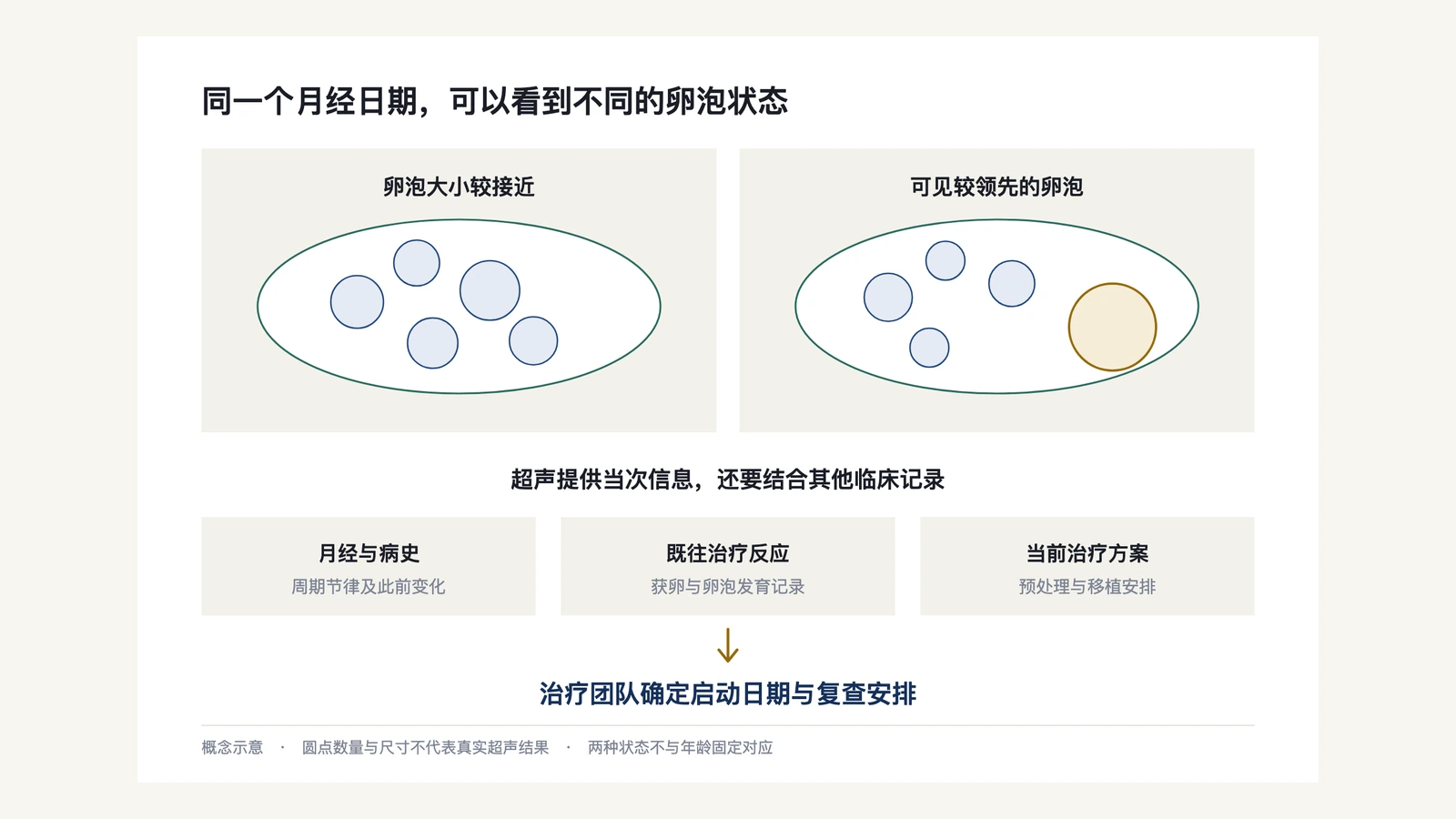
Some older women or women with diminished reserve may therefore already have one follicle clearly larger than the others when menstruation begins. An earlier clinic visit allows the clinician to identify this pattern and decide whether the cohort is suitable for stimulation under the planned protocol. The physiological study did not test whether moving medication from day 3 to day 2 improves treatment outcomes.
Table 2. Evidence on start day in different age groups
| Age | Evidence comparing day 2 and day 3 |
|---|---|
| 18–34 years | ENGAGE included this age range but did not report the effect of start day separately for it. |
| 35–36 years | Included in ENGAGE; no separate benefit from starting one day earlier after age 35 was reported. |
| 37–39 years | Outside the age range of the direct comparison; reliable age-stratified evidence is insufficient. |
| ≥40 years | Reliable day-2 versus day-3 comparisons are lacking. A physiological study in women aged 40–45 documented earlier follicular development but did not compare treatment schedules. |
Sources: references [2] and [6]. ENGAGE included women up to age 36. The physiological study in women aged 40–45 examined follicular development rather than treatment outcomes after different start days.
Age and diminished ovarian reserve do not always occur together. Younger women can also have diminished reserve, shorter cycles or a previous low response to stimulation. Conversely, an older woman may have a cohort of similarly sized follicles on the current ultrasound. These findings and previous treatment records should be considered together with age. [4,10]
What guidelines say about the start date
The 2025 update of the European Society of Human Reproduction and Embryology (ESHRE) ovarian-stimulation guideline contains 121 recommendations and searched the literature through 2 February 2025. It does not state that women above a particular age must switch from a day-3 to a day-2 start. Chinese guidance from 2015 on ovarian-stimulation medication, the 2019 guideline for assisted reproduction in older women and the 2022 consensus on diminished ovarian reserve likewise do not set such an age-based rule. [1,8–10]
ESHRE does address a “delayed start.” For predicted low responders, the guideline conditionally recommends against delayed-start ovarian stimulation, with very-low-certainty evidence. The evaluated interventions include delaying medication until cycle day 4 and differ from the usual choice between day 2 and day 3. [1]
A randomized trial published in 2020 enrolled 113 women and compared corifollitropin alfa administered on cycle day 2 or day 4. Overall, there was no statistically significant difference in oocyte yield (8.9±5.6 versus 8.8±6.2) or cumulative live-birth rate (29.2% versus 37.7%). Thirty-one participants were predicted low responders. In this subgroup, 6 of 15 women in the day-4 group had the cycle cancelled because only one follicle responded; the day-2 subgroup included 16 women. Among those who reached oocyte retrieval, cumulative live births were 0/9 in the day-4 group and 3/13 in the day-2 group. [7]
This subgroup was very small, but the result raises concern about delaying stimulation in women with lower reserve. The trial also changed the subsequent timing of FSH and antagonist medication, so it compared complete day-2 and day-4 schedules. It does not answer the day-2 versus day-3 question.
NICE published guideline NG257 on 31 March 2026. Its recommendations on pituitary suppression and controlled ovarian stimulation refer readers to the ESHRE 2025 update and do not create a separate age-based rule for choosing day 2 or day 3. [11]
Medication timing differs across protocols
An oocyte-retrieval cycle often uses several medications. Gonadotropins stimulate follicular growth. GnRH agonists or antagonists regulate pituitary signalling and help prevent premature ovulation. Because the medications serve different purposes, their start dates differ. [8,13]
In a long protocol, downregulation medication is usually given before ovarian stimulation, and the stimulation start depends on the assessment after downregulation. In some short agonist protocols, the agonist begins early in the menstrual cycle and gonadotropins are added afterward. A record stating “medication on cycle day 2” can therefore refer to different medications.

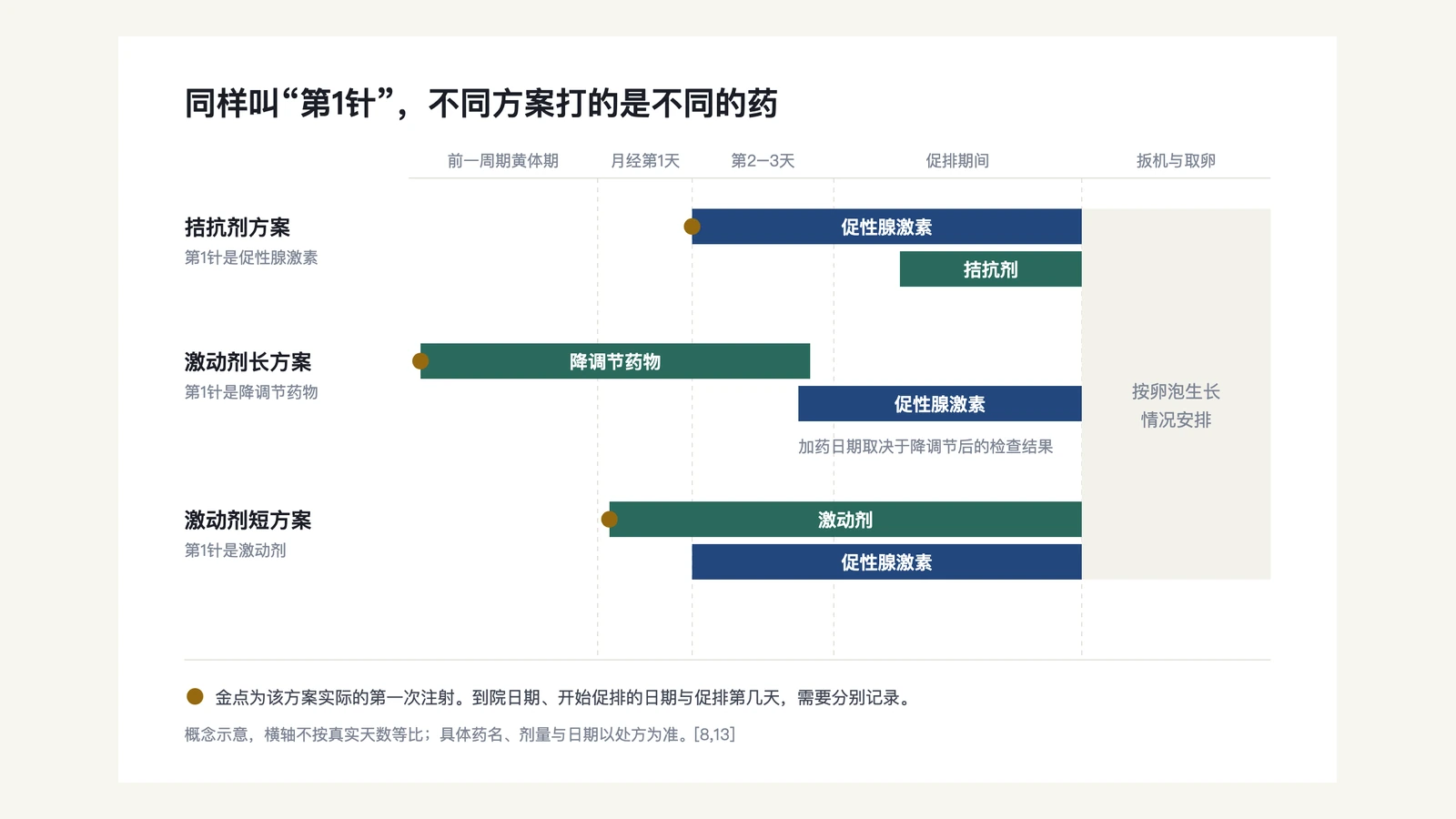
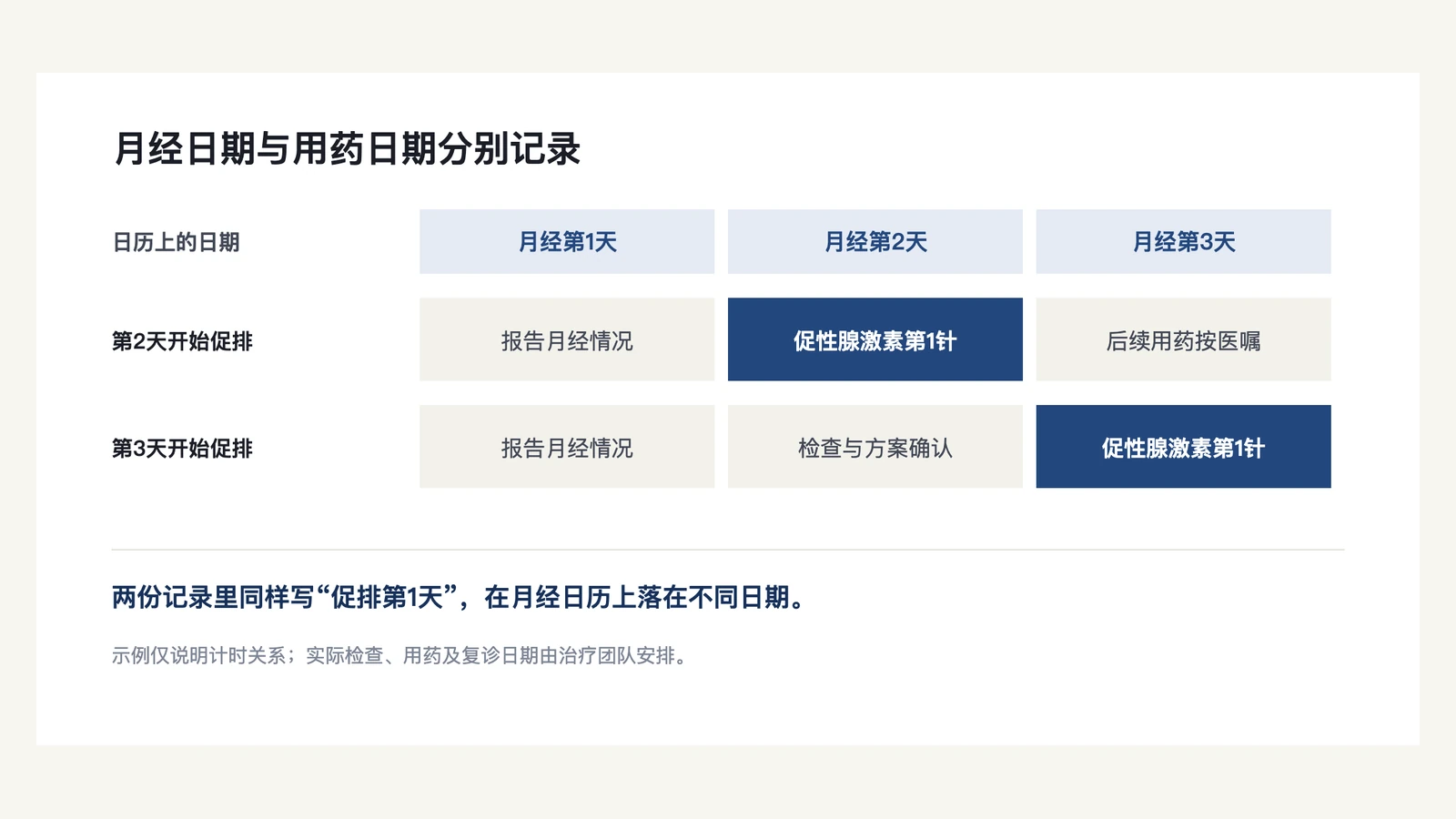
“Return to the clinic on cycle day 2 and begin stimulation injections on day 3” can be a normal sequence within one plan. The clinic-visit date, the first day of stimulation medication and the numbered stimulation day should be recorded separately.
Some treatments do not need to begin during early menstruation. For patients facing chemotherapy or another gonadotoxic treatment, ESHRE recommends that fertility-preservation stimulation should not be restricted by menstrual-cycle phase. When fresh embryo transfer is not planned, the guideline also recognizes random-start stimulation and advises discussing the risks associated with a concurrent natural conception and ovarian hyperstimulation syndrome. [1]
Assessment and medication after menstruation begins
Cycle day 1 is usually counted from the onset of normal-flow bleeding. Clinics may have their own rules when there is only light spotting or full flow begins late in the evening. Reporting the actual time and amount of bleeding helps avoid misunderstandings about dates. [12]
Baseline ultrasound assesses follicle number and size and identifies cystic structures that may require further evaluation. On the same cycle day 2, one woman may have similarly sized follicles while another already has one clearly larger follicle. These cohorts may respond differently to stimulation. [1,4,13]
Blood tests are selected according to the clinical situation. The ASRM ovarian-reserve opinion places basal FSH and estradiol measurement on menstrual cycle day 2, 3 or 4. AMH is gonadotropin independent and relatively stable within and between cycles, so it can be measured at other times. [4,5]
FSH varies within a cycle and between cycles, limiting the reliability of a single measurement. An early rise in estradiol can suppress an otherwise elevated FSH value into the normal range and cause misinterpretation. Clinicians therefore consider the blood-test date, recent medication and ultrasound findings. NICE does not recommend FSH for predicting ovarian response or assisted-conception outcomes, although gonadotropin testing still has other clinical uses, including assessment of irregular menstruation. [4,11]
If cycles have become noticeably shorter in recent months, or a larger follicle has repeatedly appeared early in the cycle, contact the clinic before the next period and share these records. This can help the team arrange earlier assessment and reduce last-minute travel changes after menstruation begins.

The prescription should state the medication name, dose, start date and follow-up date. Subsequent monitoring tracks follicular growth so the clinician can adjust medication and schedule the trigger for final oocyte maturation. [1,13]
If contact with the clinic is not made until cycle day 3, whether stimulation can still begin depends on the current assessment. If travel, medication delivery or a missed dose disrupts the plan, contact the treatment team directly; do not take an extra or double dose without instructions.
References
Sources were checked through 10 September 2026. Principal sources include ESHRE, ASRM, NICE, relevant Chinese guidelines and consensus documents, and original studies indexed in PubMed or PMC. This is a narrative patient-education review, not a registered systematic review.
- [1] ESHRE Guideline Group on Ovarian Stimulation (Ata B, Bosch E, Broekmans F, et al.). 2026. ESHRE guideline: ovarian stimulation for IVF/ICSI—an update in 2025. Human Reproduction. 41(4):498–514. DOI: 10.1093/humrep/deag018. The guideline contains 121 recommendations and searched literature through 2 February 2025; this article cites its recommendations on delayed start, random start and fertility-preservation stimulation, including certainty ratings.
- [2] Leader A, Devroey P, Witjes H, Gordon K. 2013. Corifollitropin alfa or rFSH treatment flexibility options for controlled ovarian stimulation: a post hoc analysis of the Engage trial. Reproductive Biology and Endocrinology. 11:52. DOI: 10.1186/1477-7827-11-52. Source for Table 1, ongoing pregnancy rates, adjusted difference and ENGAGE inclusion criteria. The study was funded by Merck Sharp & Dohme; two authors were company employees.
- [3] Levy MJ, Ledger W, Kolibianakis EM, et al. 2013. Is it possible to reduce the incidence of weekend oocyte retrievals in GnRH antagonist protocols? Reproductive BioMedicine Online. 26(1):50–58. DOI: 10.1016/j.rbmo.2012.09.014. Uses data from the same trial as reference [2].
- [4] ASRM Practice Committee. 2020. Testing and interpreting measures of ovarian reserve: a committee opinion. Fertility and Sterility. 114:1151–1157. DOI: 10.1016/j.fertnstert.2020.09.134. Basal FSH and estradiol timing, FSH variability, early estradiol rise and AMH stability.
- [5] ASRM Practice Committee. 2021. Fertility evaluation of infertile women: a committee opinion. Fertility and Sterility. 116:1255–1265. DOI: 10.1016/j.fertnstert.2021.08.038. Sections concerning ovarian-reserve assessment.
- [6] Klein NA, Harper AJ, Houmard BS, et al. 2002. Is the short follicular phase in older women secondary to advanced or accelerated dominant follicle development? Journal of Clinical Endocrinology & Metabolism. 87(12):5746–5750. DOI: 10.1210/jc.2002-020622. Daily hormone testing and transvaginal ultrasound in natural cycles and after GnRH-agonist suppression.
- [7] Revelli A, Gennarelli G, Sestero M, et al. 2020. A prospective randomized trial comparing corifollitropin-α late-start (day 4) versus standard administration (day 2) in expected poor, normal, and high responders undergoing controlled ovarian stimulation for IVF. Journal of Assisted Reproduction and Genetics. 37:1163–1170. DOI: 10.1007/s10815-020-01742-5.
- [8] Qiao J, Ma C, Liu J, et al.; Chinese Society of Reproductive Medicine. 2015. Expert consensus on ovarian-stimulation medication in assisted reproduction. Reproduction and Contraception. 35(4):211–223. DOI: 10.7669/j.issn.0253-357X.2015.04.0211.
- [9] Jiang L, et al.; Chinese Society of Reproductive Medicine. 2019. Chinese clinical practice guideline for assisted reproduction in older women with infertility. Chinese Journal of Evidence-Based Medicine. 19(3):253–270. DOI: 10.7507/1672-2531.201812103. English version: Journal of Evidence-Based Medicine. 12(2):167–184. DOI: 10.1111/jebm.12346.
- [10] Expert Consensus Group on Clinical Diagnosis and Treatment of Diminished Ovarian Reserve. 2022. Expert consensus on clinical diagnosis and treatment of diminished ovarian reserve. Journal of Reproductive Medicine. 31(4):425–434. DOI: 10.3969/j.issn.1004-3845.2022.04.001.
- [11] NICE. 2026. Fertility problems: assessment and treatment—NG257. Published 31 March 2026. Section 1.43 refers pituitary suppression and controlled ovarian stimulation to the ESHRE 2025 update; recommendations 1.18.4, 1.18.5 and 1.18.10 address AMH/AFC, FSH prediction and gonadotropin testing in irregular menstruation.
- [12] Worcestershire Acute Hospitals NHS Trust. You and Your Fertility Journey. Patient information on defining cycle day 1 and contacting the clinic. Accessed 10 September 2026.
- [13] Guy’s and St Thomas’ NHS Foundation Trust. 2023. IVF treatment—Step 1: Medicines to produce eggs. Patient information covering long and short protocols and medication instructions.
Medical notice
This article supports understanding of ovarian-stimulation treatment. Medication must follow the treating clinician’s prescription. Illustrations and diagrams do not represent an individual’s actual follicle number, follicle size or probability of success.
Interpret the start date within the complete cycle
FS can help organize previous cycles, ultrasound, hormone tests and medication records across clinics. The treating clinician determines the start date, dose, monitoring and trigger from the current assessment.
Guidelines and research
The article preserves study populations, sample sizes, effect estimates and applicability limits. Guidance changes; the treating clinician should confirm the current plan before treatment.
- ESHRE ovarian stimulation guideline 2025
- ENGAGE analysis of cycle-day 2 versus day 3
- ENGAGE weekend-retrieval analysis
- ASRM ovarian-reserve testing opinion
- ASRM female-infertility evaluation opinion
- Physiological study of follicular development with age
- Randomized trial of cycle-day 2 versus day 4
- Chinese guideline for assisted reproduction in older women
- NICE fertility guideline NG257 (2026)
- Guy's and St Thomas' IVF medication information
This article is for health education and clinical discussion. It is not a diagnosis or prescription and does not replace consultation with a reproductive-medicine specialist.