
A very common fertility-clinic situation looks like this: a couple has tried for one or two years, the test results are not completely normal, but the case is not an obvious immediate-IVF case. The woman still ovulates, at least one tube may function, semen is mildly to moderately abnormal, and the uterine cavity or pelvis may have inflammation, adhesions or a small polyp. The physician suggests treating the basic barriers and then trying IUI, while the patient wonders: if IVF has a higher success rate, why not go straight to IVF?
The misunderstanding is simple but important: IVF is not the endpoint for every infertile patient, and earlier is not always better. The right pathway is not ordered by how advanced the technology sounds. It is chosen by cause, age, ovarian reserve, tubal condition, semen quality, prior failures, risk and cost.


1. First identify the cause, then choose the pathway
The World Health Organization treats infertility as a disease of the reproductive system. In general, evaluation is appropriate after 12 months of regular unprotected intercourse without pregnancy; if the woman is 35 or older, the waiting period should usually be shorter. WHO reported in 2023 that about one in six adults experiences infertility during their lifetime, and its 2025 guideline emphasizes evidence, access, cost-effectiveness and individualized care rather than simply expanding high-tech treatment.
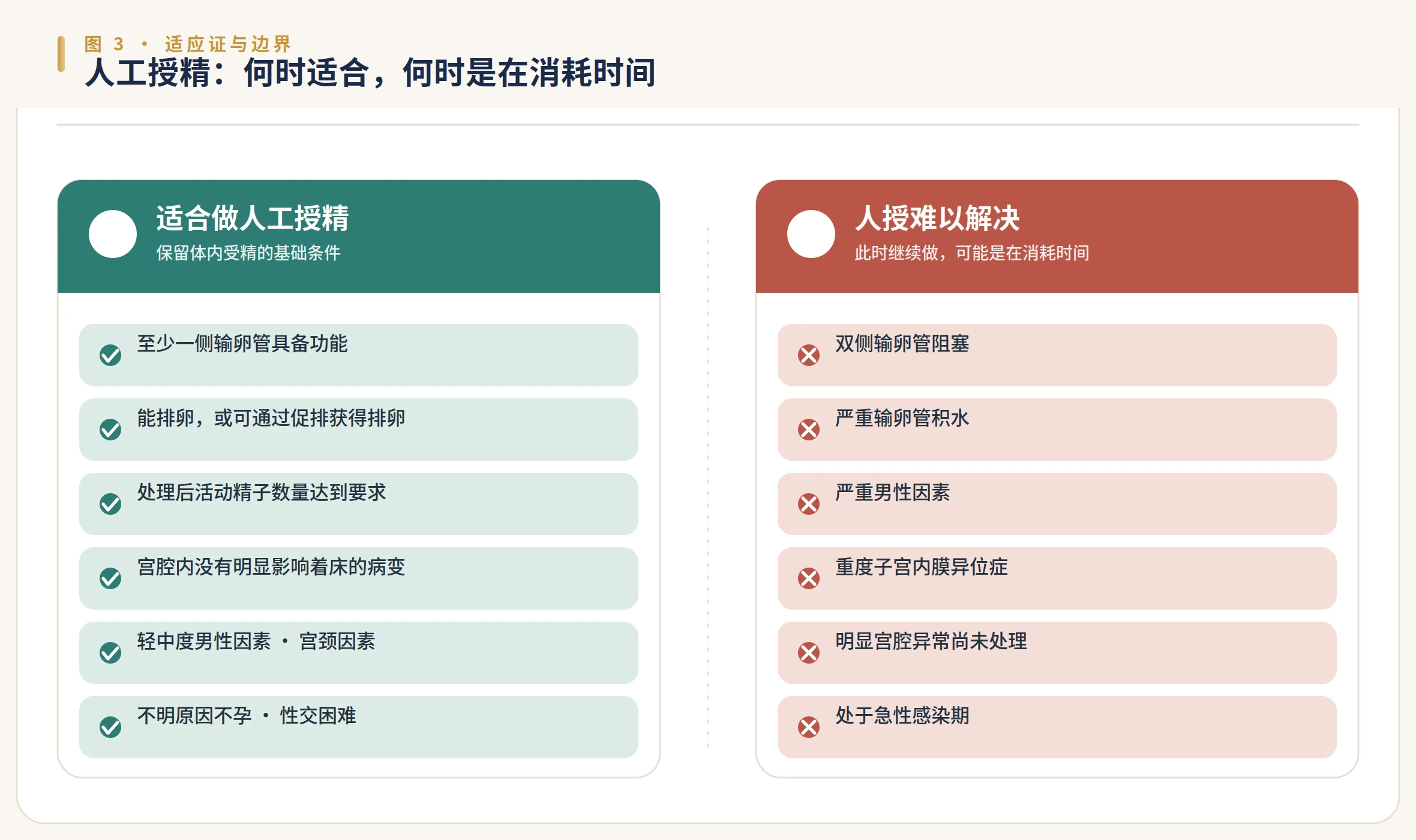
Before treatment, at least four questions should be clear: whether ovulation is regular, whether semen quality can support natural conception or IUI, whether at least one tube and the pelvic environment allow sperm, egg and early embryo movement, and whether the uterine cavity and endometrium are suitable for implantation.
ASRM's committee opinion on female infertility evaluation similarly emphasizes ovulation, reproductive-tract structure and patency, and semen evaluation. Unexplained infertility should mean that required baseline evaluation has not found an obvious cause, not that the basic evaluation can be skipped.
2. IUI is not low-grade IVF; it has its own indications
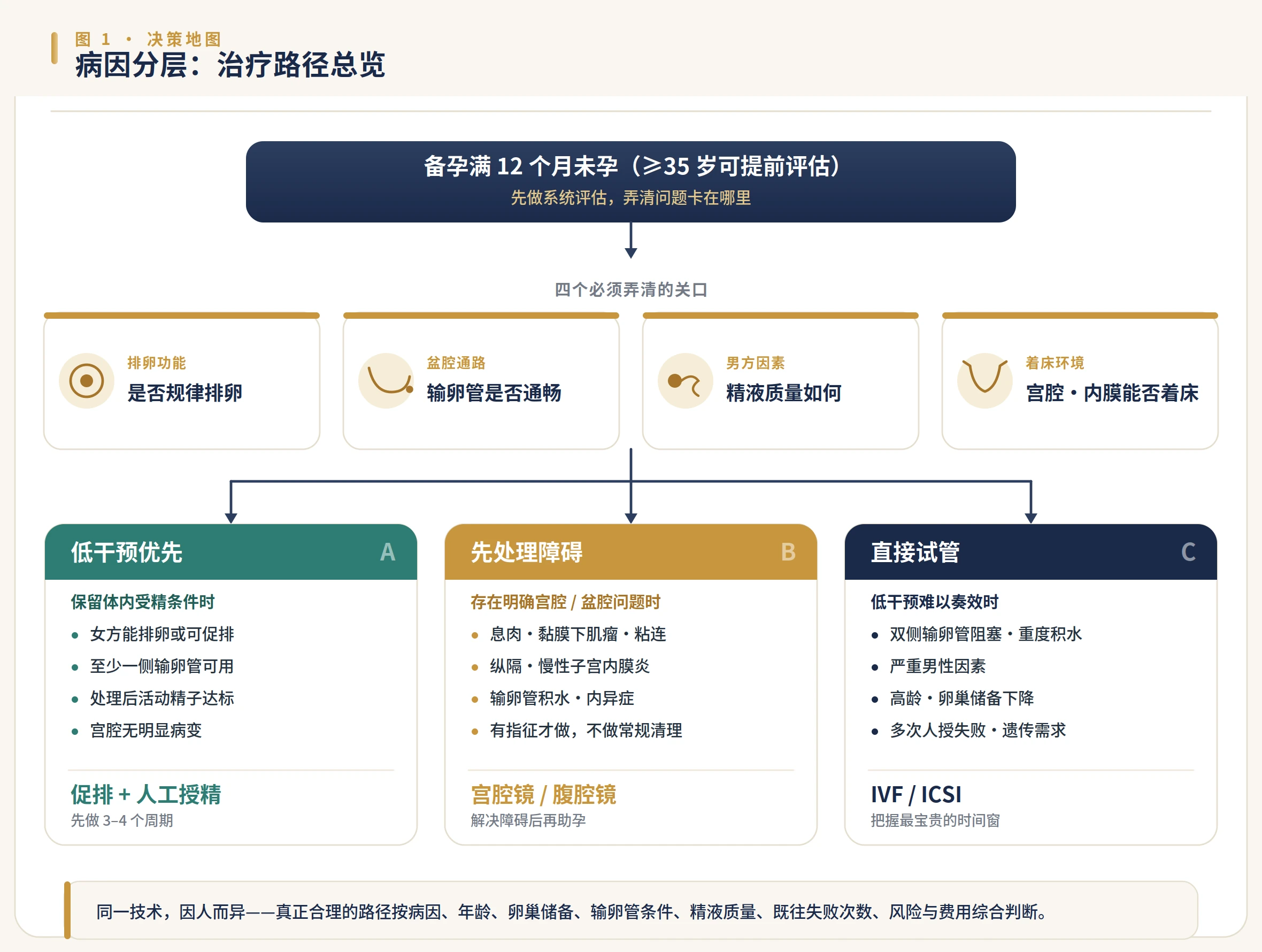
Intrauterine insemination places prepared sperm into the uterine cavity around ovulation. It shortens the distance sperm must travel and increases the chance that sperm and egg meet. It does not retrieve eggs, culture embryos outside the body, or bypass the tubes.
That is why IUI requires clear conditions: at least one functional tube, ovulation or ovulation that can be induced, a basic post-wash motile sperm threshold, and no major uterine-cavity barrier to implantation.
In mild to moderate male factor, unexplained infertility, cervical factor and intercourse difficulty, IUI can have real clinical value. It is not a casual delay. It is a lower-intervention opportunity when the biology still supports fertilization inside the body.
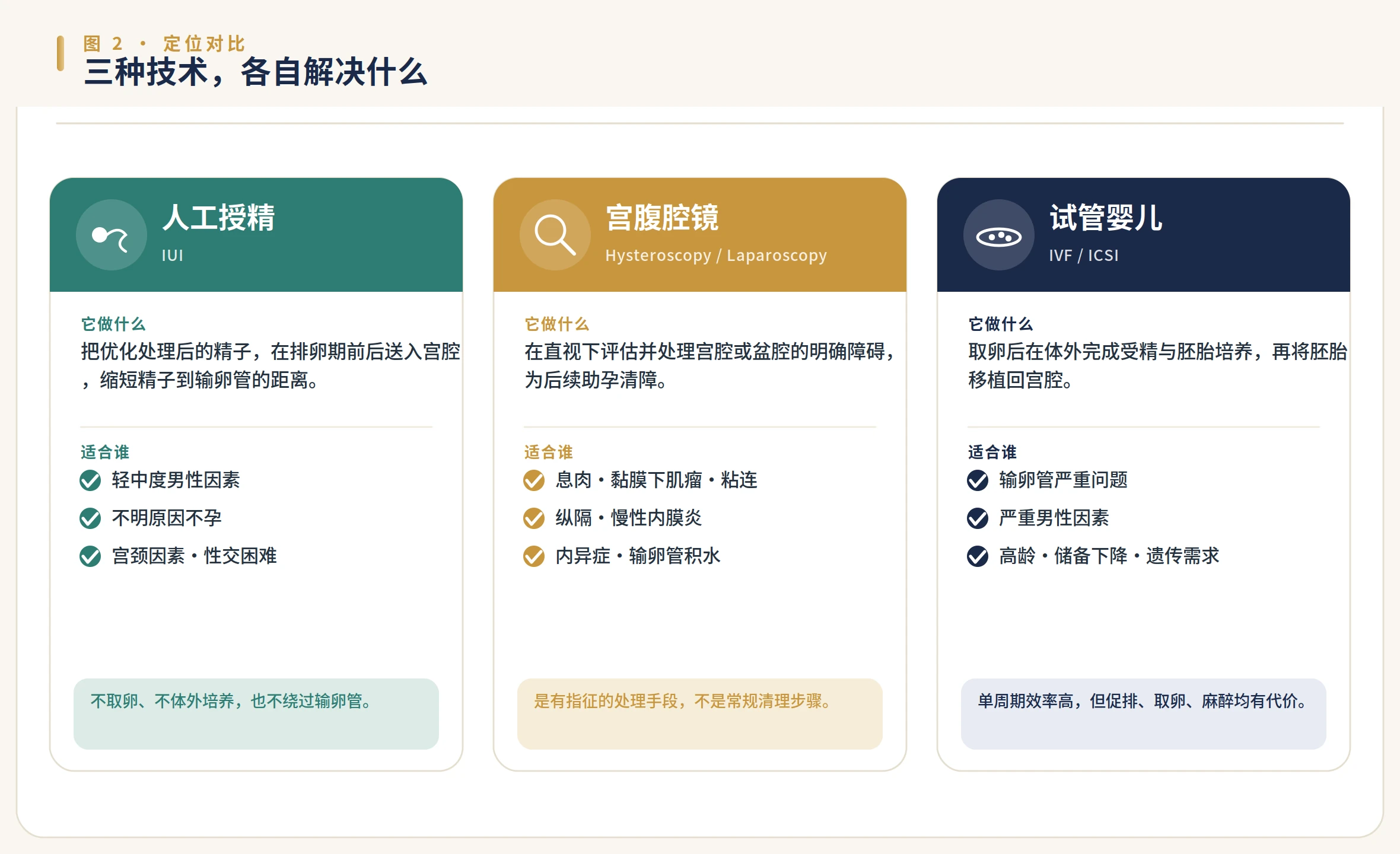
IUI also has boundaries. Bilateral tubal blockage, severe hydrosalpinx, severe male factor, severe endometriosis, an untreated major uterine abnormality or an acute infection usually cannot be solved by IUI. Continuing IUI in those settings may waste the most valuable resource: time.
3. Why some patients should try IUI before IVF
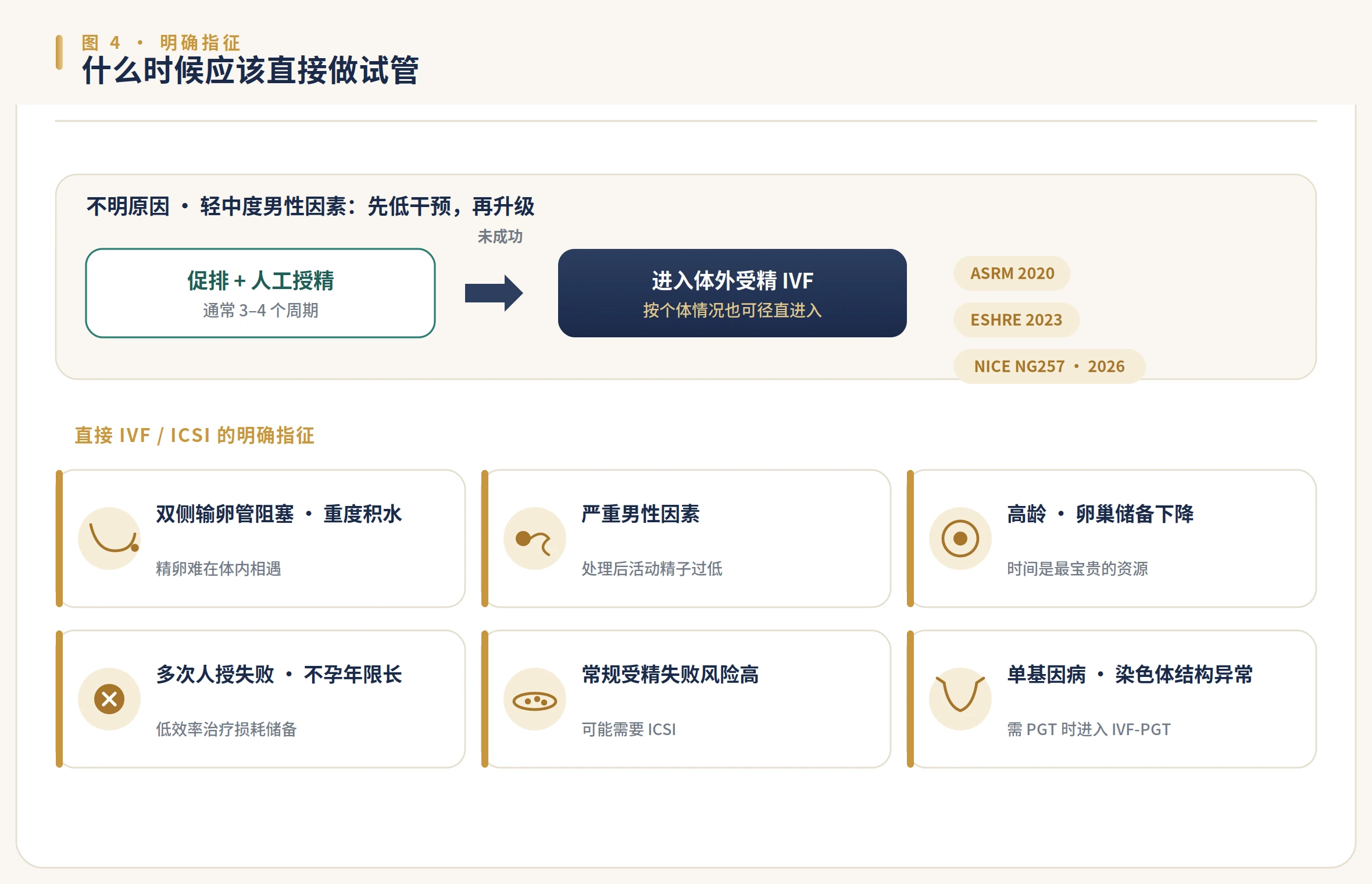
For unexplained infertility or mild to moderate male factor, multiple guidelines support a stepwise approach. ASRM's 2020 guideline on unexplained infertility states that many couples can try oral ovarian stimulation with IUI for about three to four cycles before moving to IVF. ESHRE's 2023 guideline also lists ovarian stimulation plus IUI as a first-line option and stresses age, duration, natural-conception prognosis and history.
This does not mean every patient must try IUI, or that failed IUI cycles are required before IVF. The logic is narrower: when the conditions for natural or low-intervention conception remain, IUI may offer a pregnancy opportunity with lower cost, less bodily burden and fewer laboratory steps.
IVF usually has higher single-cycle efficiency, but it is not cost-free. Stimulation, monitoring, egg retrieval, anesthesia, embryo culture, transfer, cryostorage and waiting for results all bring physical, psychological and financial burdens, along with risks such as ovarian hyperstimulation, multiple pregnancy, prematurity and low birth weight.
4. When direct IVF or ICSI is more reasonable
IVF should not be idolized, but it should not be delayed when indicated. IVF may be the more appropriate starting point in bilateral tubal blockage, severe hydrosalpinx, severe male factor, very low post-wash motile sperm, high risk of conventional fertilization failure, advanced age, declining ovarian reserve, long infertility duration, repeated failed IUI, or a genetic indication requiring PGT.
ASRM's opinion on tubal surgery in the ART era recommends considering age, ovarian reserve, prior fertility, desired number of children, site and severity of tubal disease, other infertility factors, semen quality, surgical expertise, IVF success rates, cost and patient preference when choosing between surgery and IVF.


5. Surgery should treat a defined barrier; immune add-ons should not become routine
Hysteroscopy or laparoscopy can be useful before IUI or IVF, but only when the indication is clear. Hysteroscopy evaluates the uterine cavity, such as polyps, submucosal fibroids, adhesions, septum or chronic endometritis patterns. Laparoscopy evaluates the pelvis, such as tubal adhesions, pelvic inflammatory damage, endometriosis or hydrosalpinx.
If imaging, history or symptoms suggest tubal abnormality, repeated infertility, repeated implantation failure, significant pain, suspected endometriosis, a uterine-cavity lesion or abnormal endometrium, surgery may reduce detours. Without supportive symptoms, imaging or history, turning it into a fixed step for everyone adds avoidable anesthesia, bleeding, infection, adhesions and cost.
Immune treatment also should not be marketed as a universal fertility booster. Some settings require careful assessment, such as antiphospholipid syndrome, autoimmune disease or recurrent pregnancy loss. But ASRM's IVF immunotherapy guideline states that routine immune testing and adjuvant immunotherapy lack sufficient evidence, and ESHRE's add-on guidance emphasizes that many extra tests and treatments should not be used routinely without clear discussion of evidence, benefit, risk and cost.
More intervention does not equal more safety. Do what is indicated, and avoid what is not.
6. Natural conception is not morally superior, and IVF does not make a child inferior
Supporting a lower-intervention first step does not mean naturally conceived children are better, or that IVF-conceived children are inherently worse. That claim is inaccurate and unfair to families who build their family through ART.
A better statement is this: if the patient still has the conditions for natural conception or lower-intervention assistance, starting there can reduce burden, cost, laboratory manipulation and certain treatment-related risks. If there is a clear IVF indication, delaying IVF because natural is best can also be harmful.
Evidence supports a balanced view of ART offspring outcomes. A PLOS Medicine study using large Australian datasets found no detectable meaningful differences in school-age development and educational outcomes between IVF-conceived and naturally conceived children. A 2023 Fertility and Sterility review also noted that systematic reviews generally do not show consistent differences in language, behavior or social function. The major risks to manage are treatment-related perinatal risks, especially multiple pregnancy, prematurity and low birth weight.
7. A decision closer to clinical reality
Consider a 32-year-old woman who has tried for 18 months, has basically regular cycles, acceptable AMH and AFC, one patent tube and one partially compromised tube, mild to moderate asthenozoospermia with post-wash sperm still adequate for IUI, and a possible small endometrial polyp. A reasonable plan may be hysteroscopic polyp treatment, followed by about three cycles of ovarian stimulation with IUI, then IVF if unsuccessful.
The point is not to reject IVF. It is to stratify by cause. The patient does not have bilateral unusable tubes, the male factor is not severe, age pressure is present but not extreme, and the uterine-cavity issue is treatable. Treating the cavity and trying IUI first may offer a lower-intervention pregnancy opportunity.
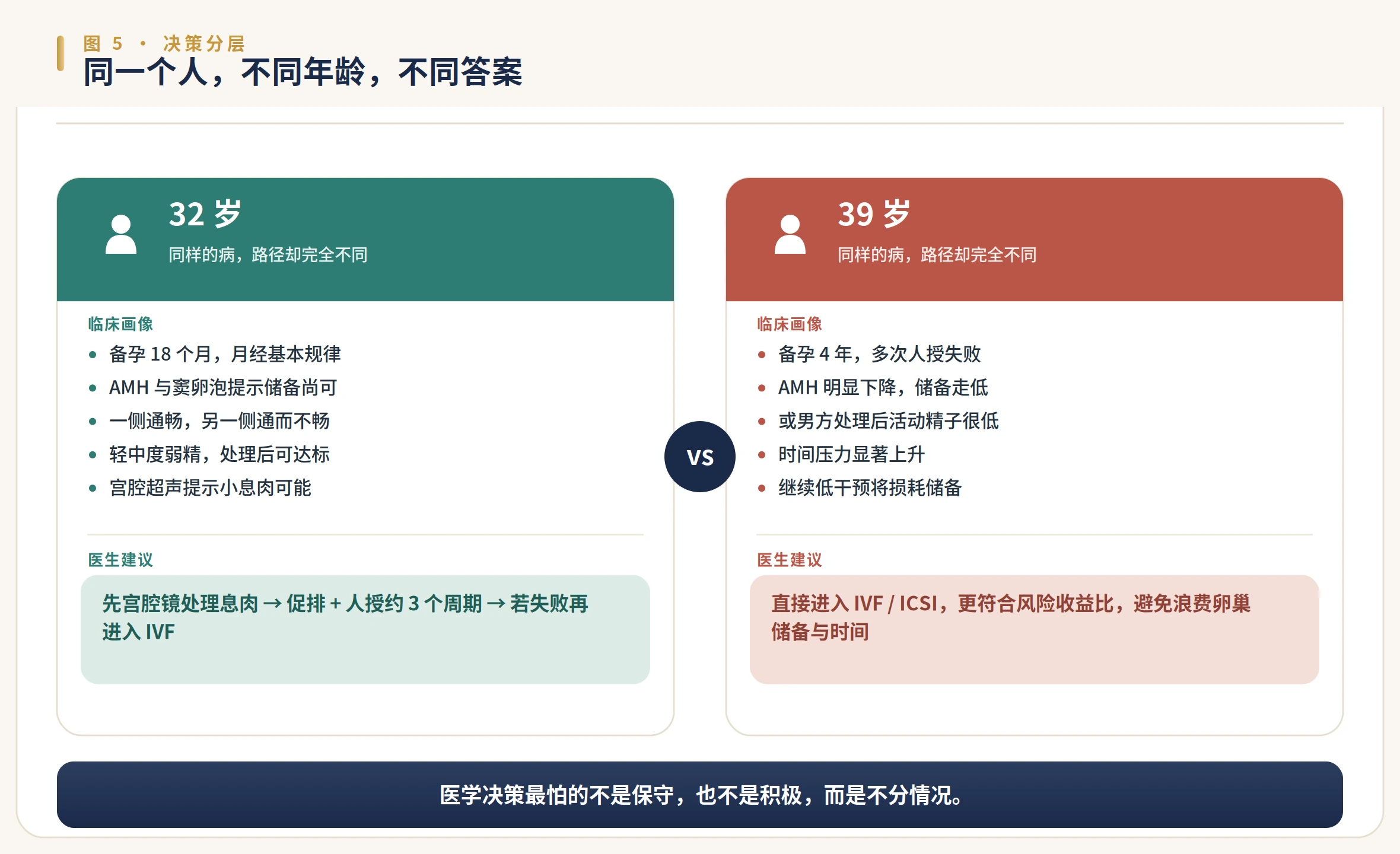
If the same patient were 39, with clearly low AMH, four years of infertility, multiple failed IUI cycles or very low post-wash motile sperm, the answer would change. Continuing IUI might waste ovarian reserve and time; IVF or ICSI would likely offer a better risk-benefit balance.

8. Five questions patients should ask
These questions are more valuable than asking whether IVF can solve everything in one step. They bring the discussion back to cause, cycles and upgrade points.
| Question | Why it matters |
|---|---|
| What is my most likely infertility category? | Separate ovulation, tubes, male factor, uterine cavity, endometriosis and unexplained infertility. |
| Do I meet the basic conditions for IUI? | At least one usable tube, controllable ovulation, adequate post-wash sperm and no major uterine-cavity barrier. |
| If I try IUI first, how many cycles are planned? | Agree on an upgrade point so low-efficiency treatment does not continue too long. |
| Is there a uterine, tubal, pelvic or immune issue that must be treated first? | Treat defined barriers; avoid generalized testing or treatment without indication. |
| If IVF is chosen now, what are the benefit, risk, cost and next step? | Clarify stimulation, embryo strategy, singleton plan and failure review in advance. |
| Situation | More reasonable starting point | Comment |
|---|---|---|
| Unexplained infertility with acceptable conditions | Ovarian stimulation + IUI for 3 to 4 cycles | Move to IVF if unsuccessful |
| Mild to moderate male factor, post-wash sperm adequate | IUI | If inadequate, consider IVF/ICSI |
| Polyp, adhesions or septum | Treat with hysteroscopy first | Remove the barrier before assistance |
| Repeated implantation failure or suspected endometriosis | Surgery only when indicated | Define the barrier before choosing a route |
| Bilateral tubal blockage or severe hydrosalpinx | Direct IVF | Sperm and egg cannot meet reliably inside the body |
| Severe male factor | IVF/ICSI | Conventional fertilization may fail |
| Advanced age, declining reserve, repeated failed IUI | Direct IVF | Avoid wasting time and ovarian reserve |
| Monogenic disease or structural chromosome risk | IVF + PGT | Embryo genetic testing may be required |
Final thought
Infertility treatment is not better because it is more advanced, and not every patient should start conservatively. IUI fits patients who still have the biological conditions for fertilization inside the body. Hysteroscopy or laparoscopy fits defined uterine or pelvic barriers. IVF fits severe tubal disease, severe male factor, advanced age or low reserve, genetic indications, or repeated failure of lower-intervention treatment.
Turn test results into a practical pathway
FS helps families organize age, ovarian reserve, tubal status, semen quality, uterine and pelvic factors, previous failures and budget boundaries into a clearer fertility decision map. This article does not replace a physician consultation.
References
This article is adapted from the supplied Word document and structured with references from WHO, ASRM, ESHRE, NICE, ACOG and peer-reviewed research.
- World Health Organization. Guideline for the prevention, diagnosis and treatment of infertility, 2025.
- World Health Organization. 1 in 6 people globally affected by infertility, 2023.
- ASRM Practice Committee. Fertility evaluation of infertile women: a committee opinion, 2021.
- ASRM Practice Committee. Evidence-based treatments for couples with unexplained infertility: a guideline, 2020.
- ESHRE. Evidence-based guideline on Unexplained Infertility, 2023.
- NICE. Fertility problems: assessment and treatment, NG257, 2026.
- ASRM Practice Committee. Role of tubal surgery in the era of assisted reproductive technology: a committee opinion, 2021.
- ASRM Practice Committee. The role of immunotherapy in in vitro fertilization: a guideline, 2018.
- ESHRE. Good practice recommendations on add-ons in reproductive medicine, 2023.
- Rumbold AR, et al. School-age outcomes among IVF-conceived children. PLOS Medicine, 2022.
- Pinborg A, Wennerholm UB, Bergh C. Long-term outcomes for children conceived by assisted reproductive technology. Fertility and Sterility, 2023.
- ACOG. Perinatal risks associated with assisted reproductive technology.
This article is educational and does not constitute individual medical advice. Treatment should be decided after evaluation by a licensed fertility center.